
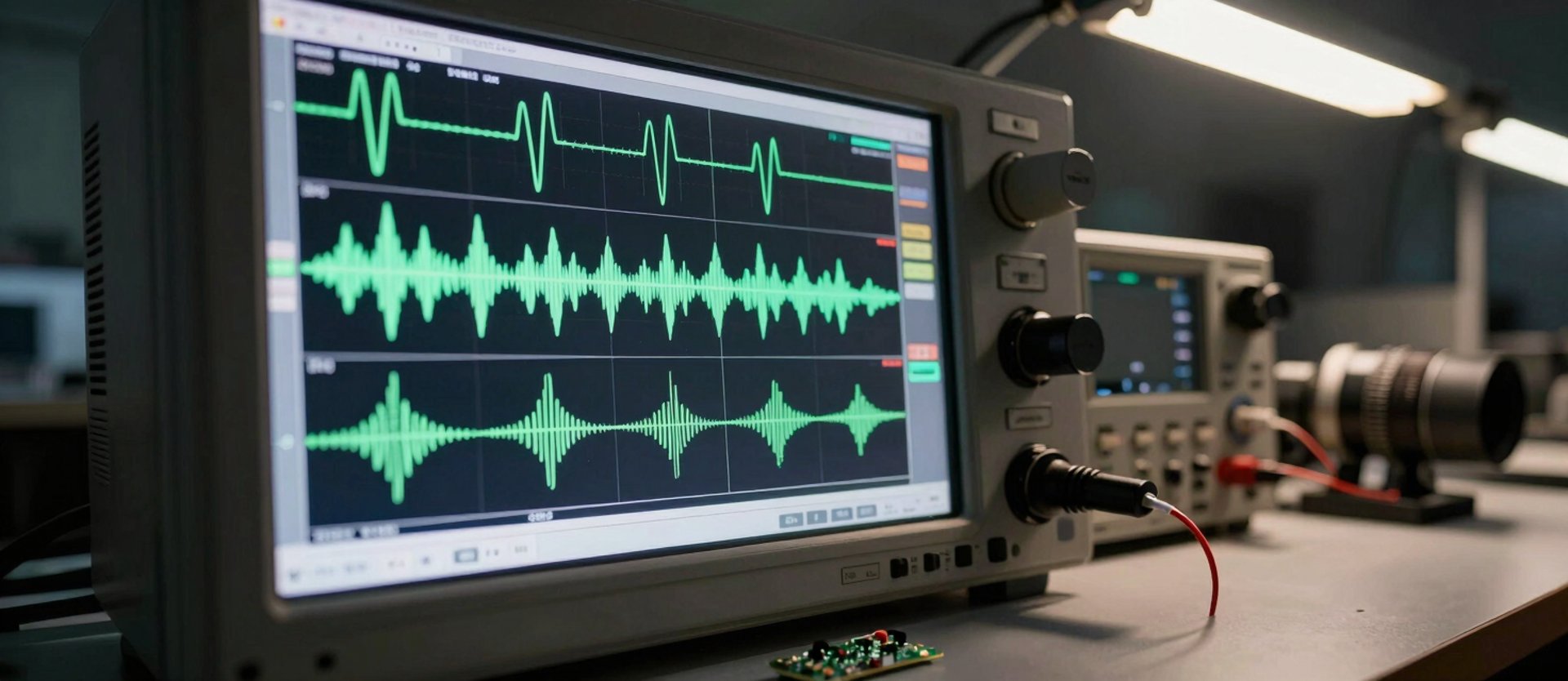
Each service maps to a specific noise problem.
No generic platforms. Every offering targets a defined signal type — sensor fusion, RF classification, thermal anomaly, adaptive calibration — with quoted inference latency and accuracy before you commit.
Pick your noise problem.
Multi-axis inertial fusion
Adaptive RF signal ID
Thermal array anomaly detection
Self-correcting sensor calibration
Classifies modulation schemes and interference sources directly from IQ data. No FFT pre-processing required. Inference runs on-device at under 8 ms per frame.
Detects hardware-level drift when you swap sensor suppliers or cross temperature boundaries. Corrects gain and offset without re-training the deployed model.
Combines accelerometer, gyroscope, and magnetometer streams. Handles sensor drift without re-tuning. Typical output latency: under 4 ms at 1 kHz sample rate.
Learns baseline thermal signatures per device SKU. Flags deviation events before threshold breach. False-positive rate under 0.3% across 80-sensor arrays.
Target SNR improvement: +12 dB — 6-axis IMU, automotive and industrial IoT.
Classification accuracy: >97% — SDR and FPGA deployment targets.
Detection latency: under 20 ms — medical device and industrial process lines.
Correction cycle: under 50 ms — edge MCU and embedded Linux targets.
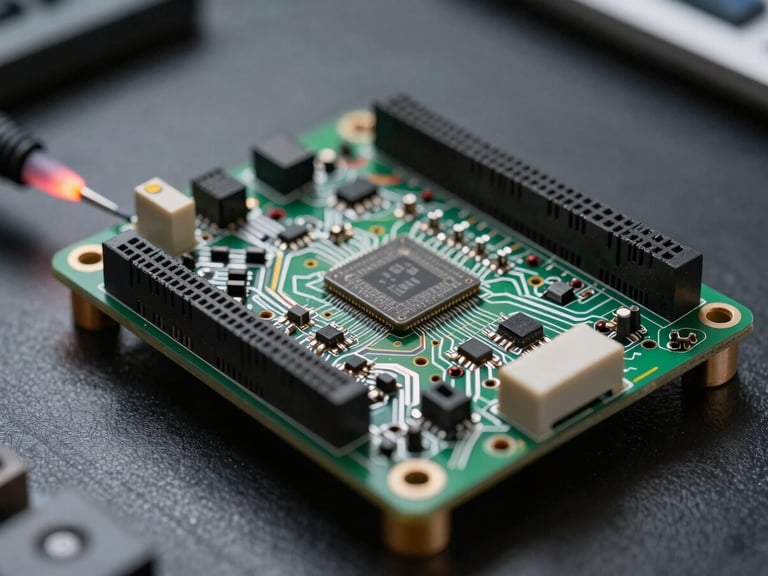
Train once. Run anywhere.
Compiled inference artifacts export to edge MCUs, FPGAs, and cloud endpoints from a single trained model. No per-target retraining. Latency and accuracy figures are quoted before integration begins.
Bring us your noise floor and accuracy target. We assess feasibility and cost before any statement of work is signed.
Targets: Cortex-M4 / M7 MCUs — ARM Ethos NPU — Xilinx / Intel FPGAs — x86 cloud endpoints — NVIDIA Jetson edge modules.
Export formats: ONNX — TFLite — C static library — FPGA bitstream wrapper.
Tell us your noise floor.
Describe your sensor type, target SNR, and deployment constraint. We respond with a concrete feasibility assessment within one business day — no sales call required.